
Understanding the Deep-Rooted U.S.-Iran Conflict
The U.S.-Iran conflict stems from decades of deep historical, political, and strategic hostility that erupted into open warfare in early 2026. Understanding the roots and modern drivers of this geopolitical standoff is crucial for analyzing stability in the Middle East.
Direct Answer Overview
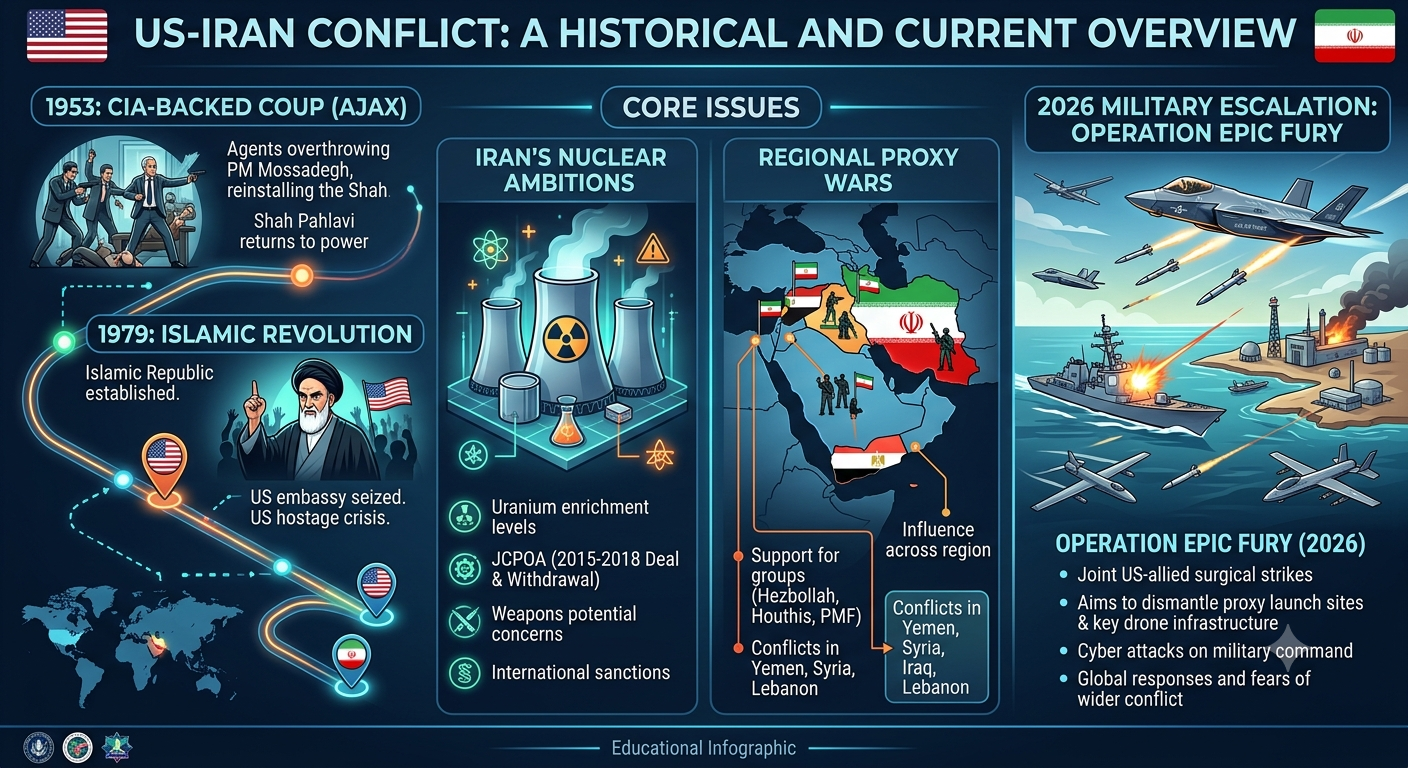
The core of the conflict centers on Iran's nuclear and ballistic missile programs, its support for regional proxy groups, control of the strategic Strait of Hormuz, and the long legacy of U.S. intervention in Iranian governance dating back to 1953.
Historical Roots of Tension
To grasp the current crisis, one must examine key historical turning points that fractured bilateral relations:
- 1953 Coup (Operation Ajax): The U.S. Central Intelligence Agency (CIA) and British intelligence orchestrated the overthrow of Iran's democratically elected Prime Minister, Mohammad Mossadegh, restoring the pro-Western Shah. Many Iranians view this as the original sin that destroyed Iranian democracy.
- 1979 Islamic Revolution: The brutal rule of the U.S.-backed Shah led to a popular revolution, overthrowing the monarchy and establishing an anti-Western theocracy under Ayatollah Khomeini.
- The Hostage Crisis: Iranian students seized the U.S. Embassy in Tehran in 1979, holding 52 Americans hostage for 444 days. This severed formal diplomatic ties, which remain non-existent today (with Pakistan and Switzerland acting as protecting powers).
Core Issues and Drivers
Several strategic friction points continue to fuel direct confrontation between both nations:
- Nuclear Ambitions: The U.S. and Israel view a nuclear-armed Iran as an existential and regional threat. Iran insists its program is peaceful, though it has enriched uranium past civilian limits following the collapse of the 2015 Joint Comprehensive Plan of Action (JCPOA).
- Regional Influence: Washington opposes Iran's backing of regional militias and proxy networks—such as Hezbollah, the Houthis, and groups in Iraq—which target U.S. allies (Israel and Gulf Arab states) and American bases.
- Economic Sanctions & "Maximum Pressure": Successive U.S. administrations—particularly under President Donald Trump—have imposed punishing economic sanctions to crush Iran's oil exports and force strategic capitulation, triggering severe economic crises inside Iran.
- Strait of Hormuz: As a critical global oil chokepoint, Iran's frequent assertions of control and disruptions to commercial shipping in the strait remain flashpoints for direct military confrontation.
Recent Military Escalation (2026)
In 2026, long-simmering tensions escalated into major kinetic operations:
- Operation Epic Fury: On February 28, 2026, the United States and Israel launched massive joint military strikes against Iranian military, nuclear, and leadership infrastructure, resulting in the death of Supreme Leader Ali Khamenei.
- Retaliation and Strain: Iran responded with extensive missile and drone barrages targeting regional U.S. assets and commercial shipping. The active conflict has strained U.S. military logistics and munitions stockpiles.
- Fragile Ceasefires: Despite Pakistan- and Qatar-mediated interim ceasefires and memoranda of understanding to halt large-scale fighting and reopen shipping lanes, intermittent strikes and compliance disputes mean a durable, comprehensive diplomatic settlement remains elusive.
Key References & External Sources
For further reading and historical documentation, explore the following resources:
- Wikipedia:" target="_blank" rel="noopener noreferrer">https://en.wikipedia.org/wiki/Iran%E2%80%93United_States_relations">Wikipedia: Iran–United States Relations Overview
- Encyclopædia" target="_blank" rel="noopener noreferrer">https://www.britannica.com/event/2026-Iran-war">Encyclopædia Britannica: 2026 Conflict Detailed Summary
- TIME" target="_blank" rel="noopener noreferrer">https://time.com/7382631/iran-israel-us-war-explainer-trump-middle-east/">TIME Explainer: Regional War Dynamics
- BBC" target="_blank" rel="noopener noreferrer">https://www.bbc.com/news/articles/c6n8m72r13ngo">BBC News: Conflict Updates & Analysis
- Council" target="_blank" rel="noopener noreferrer">https://www.cfr.org/global-conflict-tracker/conflict/confrontation-between-united-states-and-iran">Council on Foreign Relations: Global Conflict Tracker
- YouTube" target="_blank" rel="noopener noreferrer">https://www.youtube.com/watch?v=S4pzatSKwuQ">YouTube Analysis: Background Video 1
- YouTube" target="_blank" rel="noopener noreferrer">https://www.youtube.com/watch?v=uYCHgMqp0kY">YouTube Analysis: Background Video 2




























0 Thoughts on this article